How much water to store for an outage, and how to store it
The one-gallon rule, where it comes from, how long a family of four actually needs, and the three ways to hold that much in a normal house.
The rule
Every major agency uses the same figure: one gallon (about 4 litres) per person per day. Half for drinking, half for cooking, hygiene and washing hands. The minimum period is three days; the CDC says two weeks if you can manage it. Add more for children, nursing mothers, anyone unwell, pets, and hot weather.
For a family of four, that's 12 gallons for three days and 56 gallons for two weeks. Fifty-six gallons is about 210 litres — more than most people picture, and much more than the few bottles in the cupboard.
Why your taps might stop
Gravity-fed mains in low-rise areas often keep running through an outage. But anything that relies on a pump does not: private wells, booster pumps in apartment buildings, most high-rise supplies, and rural systems with pumped reservoirs. Treatment plants have backup generators, but those have fuel limits too. If you don't know whether your supply is pumped, assume it is.
Three ways to hold enough
1. Fill containers from the tap when a warning is issued
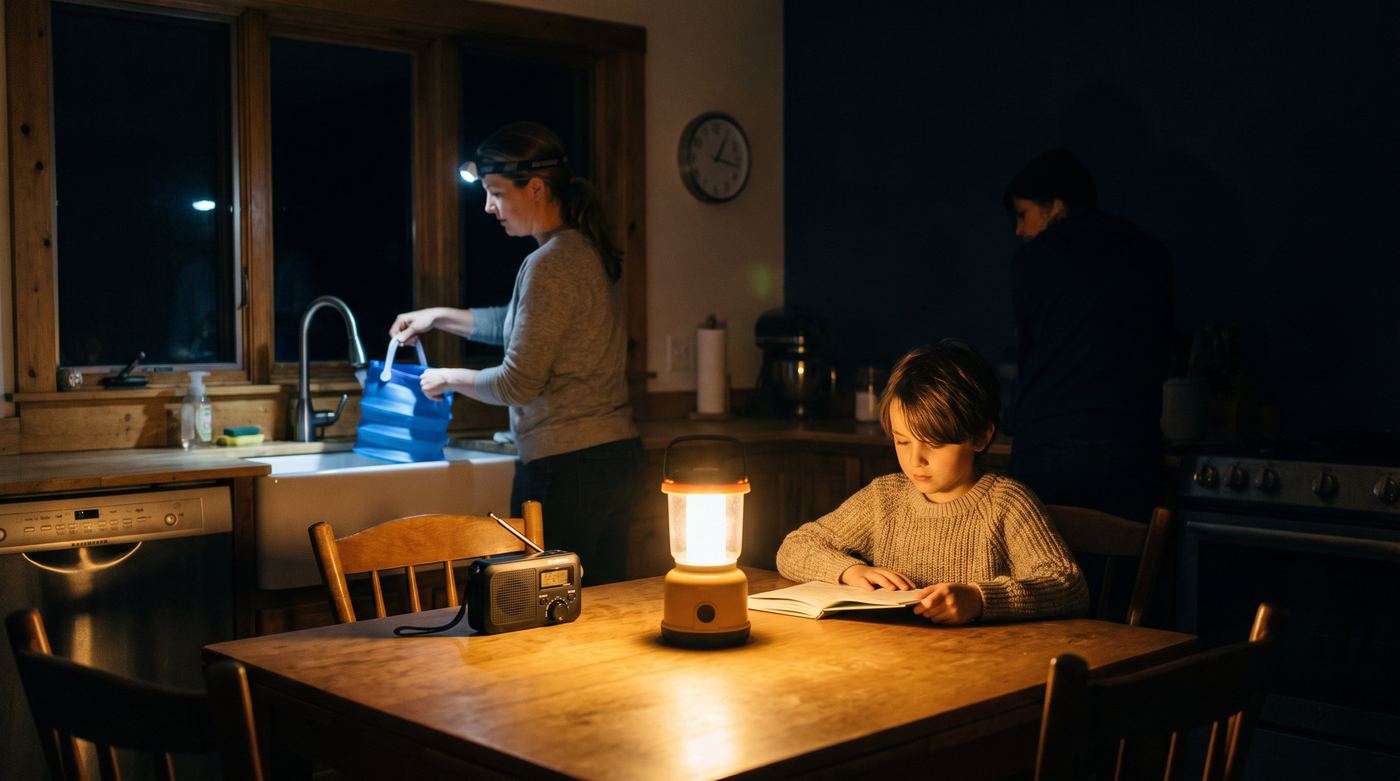
This is the cheapest and most practical. Collapsible 20-litre containers fold flat on a shelf and take a minute each to fill. Four of them is a three-day supply for a family of four, in roughly the footprint of a suitcase. A rigid carrier with a tap makes the stored water usable for handwashing and cooking without lifting it.
2. Keep a filtered reserve you don't have to think about
Store-bought bottled water keeps for years and rotates easily through normal use. Buy a few cases, use the oldest, replace it. The downside is space and cost per litre.
3. Be able to treat water you find
When stored water runs out, the rain barrel, the hot-water tank (it holds 30–50 gallons of clean water — turn off the inlet and drain from the bottom valve) and local open water become options. A gravity filter removes bacteria and protozoa without power; purification tablets or boiling cover viruses. Both together is the belt-and-braces approach the CDC recommends for water of unknown quality.
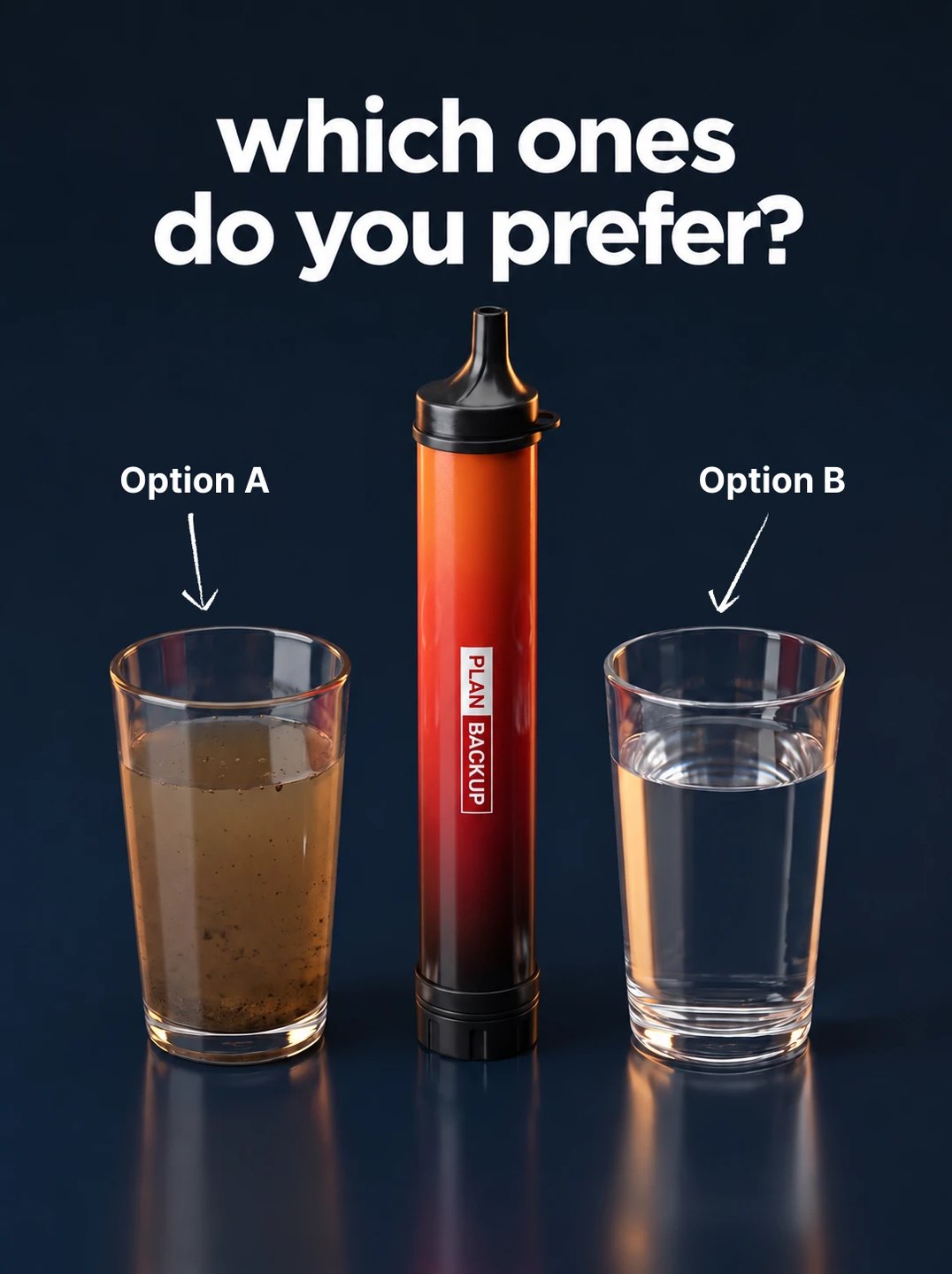
Plan Backup Survival Straw
Three-stage hollow-fibre filter: drink direct, screw onto a bottle, or filter by gravity. No power, no expiry. The 5-pack comes with two guides free.
From $29.95 · 5-pack $74.95See the strawWhat not to drink
Don't use water from the toilet tank, radiators or a swimming pool for drinking — chemicals and treatments make it unsafe even after filtering. Don't rely on a filter straw alone for water that might contain viruses (floodwater, water downstream of sewage); add tablets or boil.
The storage plan, in one line
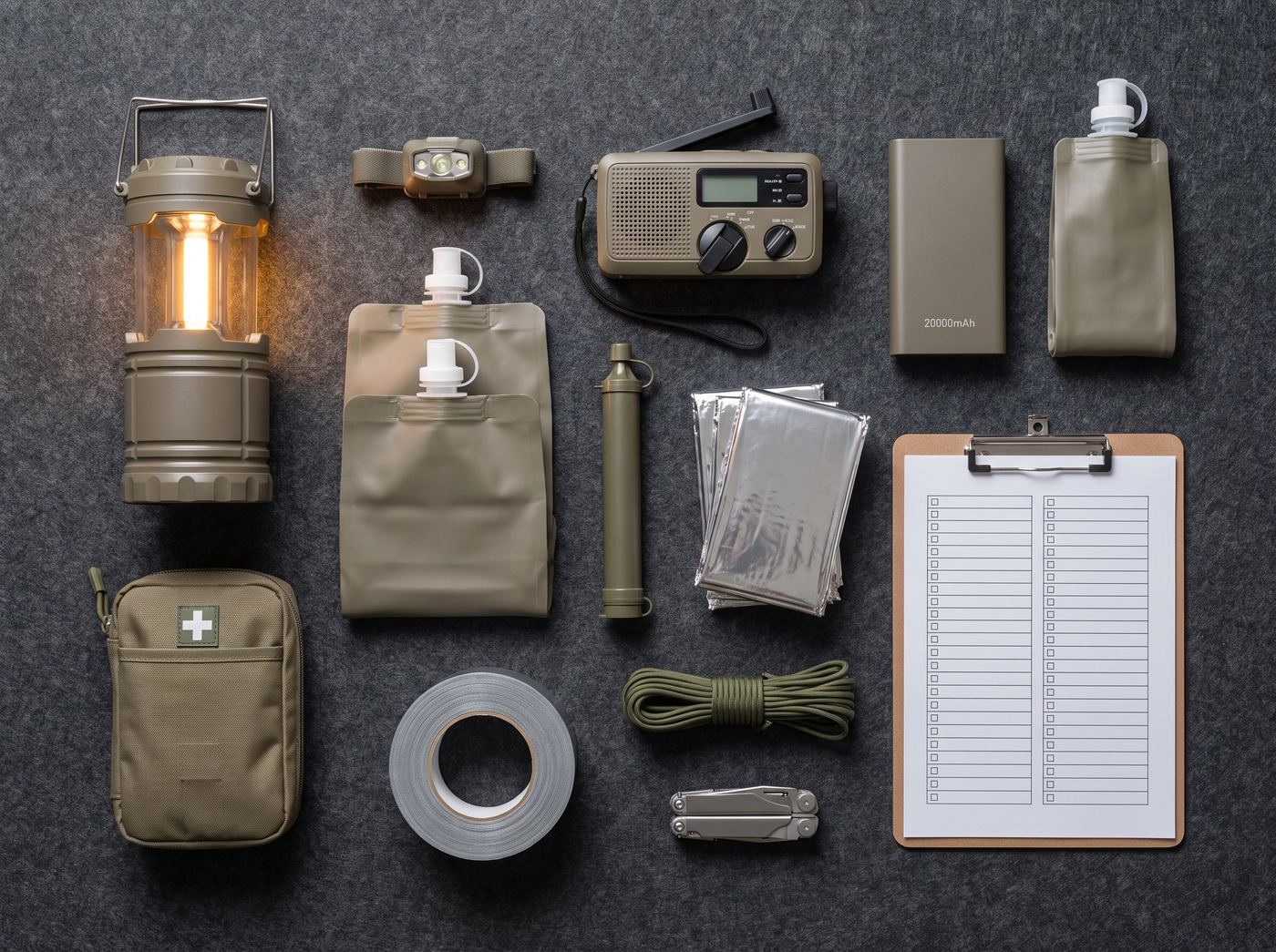
Four collapsible containers and a tap carrier on a shelf, a gravity filter and tablets in the kit, and the habit of filling everything the moment a warning goes out.
A straw per person covers the third option. The printable Home & Go-Bag Checklist guide that comes free with the 5-pack has a storage calculator for your household's actual number.
- CDC — Creating and storing an emergency water supply
- Ready.gov — Water
- CDC — Making water safe in an emergency
Plan Backup is an independent retailer. Articles cite official guidance where it exists and say when a recommendation is ours.