How to keep your phone charged for a week without the grid
A phone is your torch, radio, map and lifeline. Here's how to make one charge last, and how to make more charge when there's no socket.
29 October 2026 · 6 min read · Sources listed at the end
First, stop the bleeding
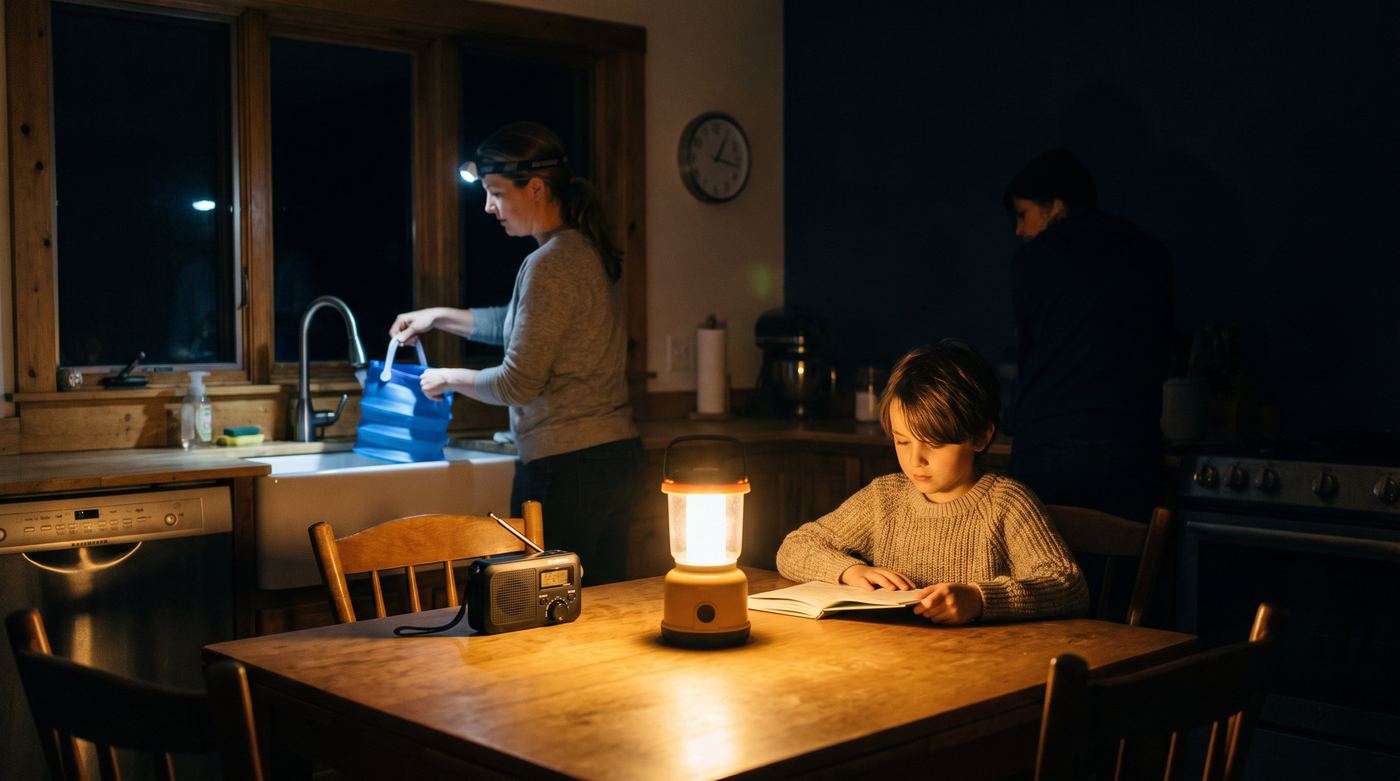
A phone on an outage day is doing three things that drain it fast: hunting for a signal, lighting the room, and being checked every two minutes. Fix all three.
- Switch to low-power mode and turn the screen brightness right down.
- If there's no signal, put it in airplane mode and check once an hour. Searching for towers is the single biggest drain.
- Stop using the phone as a torch. A headlamp or lantern does the job for days on one charge; your phone can't.
Done properly, a full phone lasts two to three days instead of one evening.
Then, add stored charge
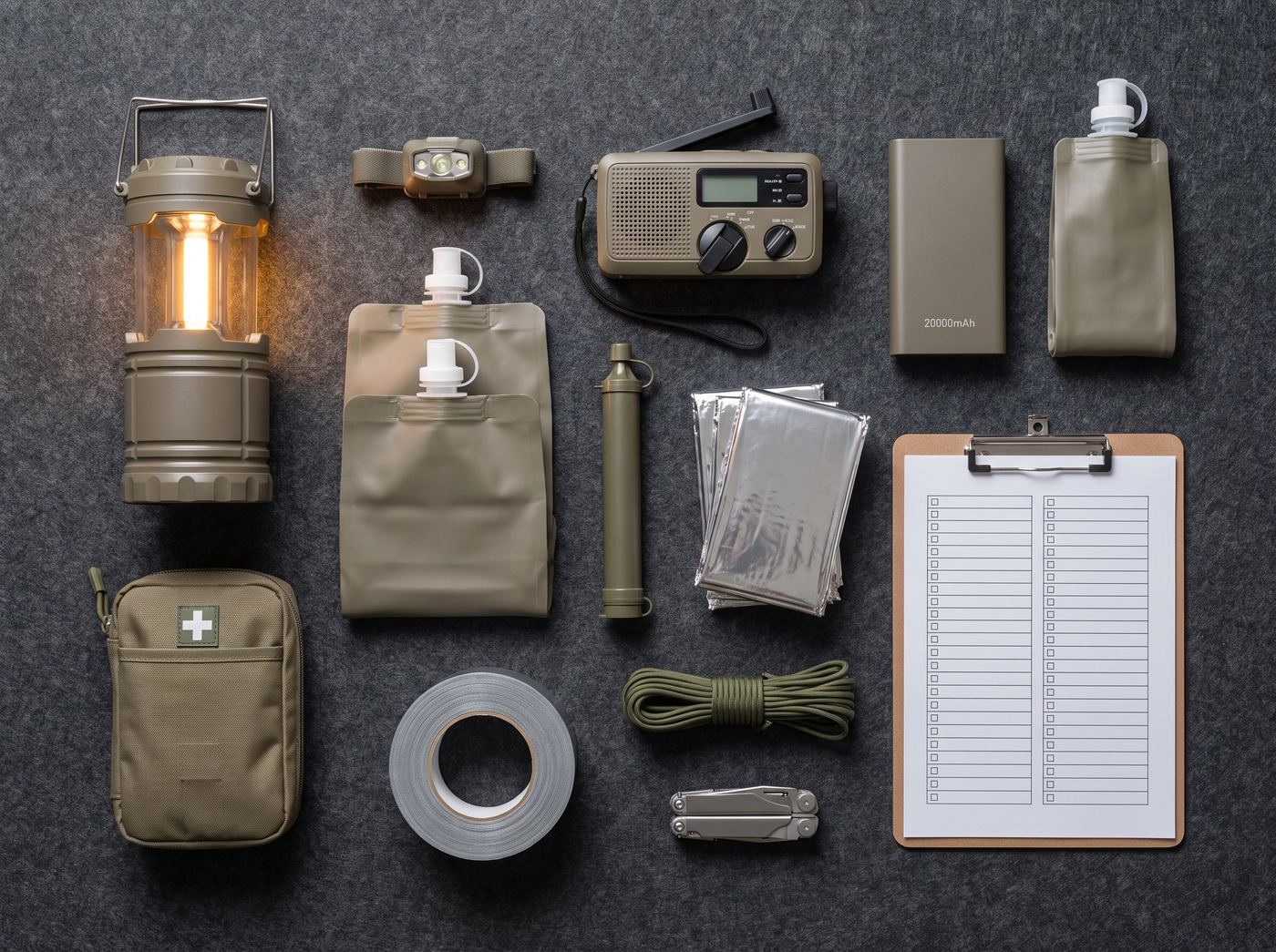
A 20,000mAh power bank holds roughly four to five full phone charges. Two of them, kept topped up, is a week for a couple. Solar banks add a trickle of charge in a sunny window — not fast, but it's charge you didn't have.
Then, make charge
Three sources that work with no grid at all:
Your car
A parked car is a generator. An inverter in the 12V socket gives you a mains outlet; ten minutes of engine running charges a phone. Never run the car in a closed garage.
The sun
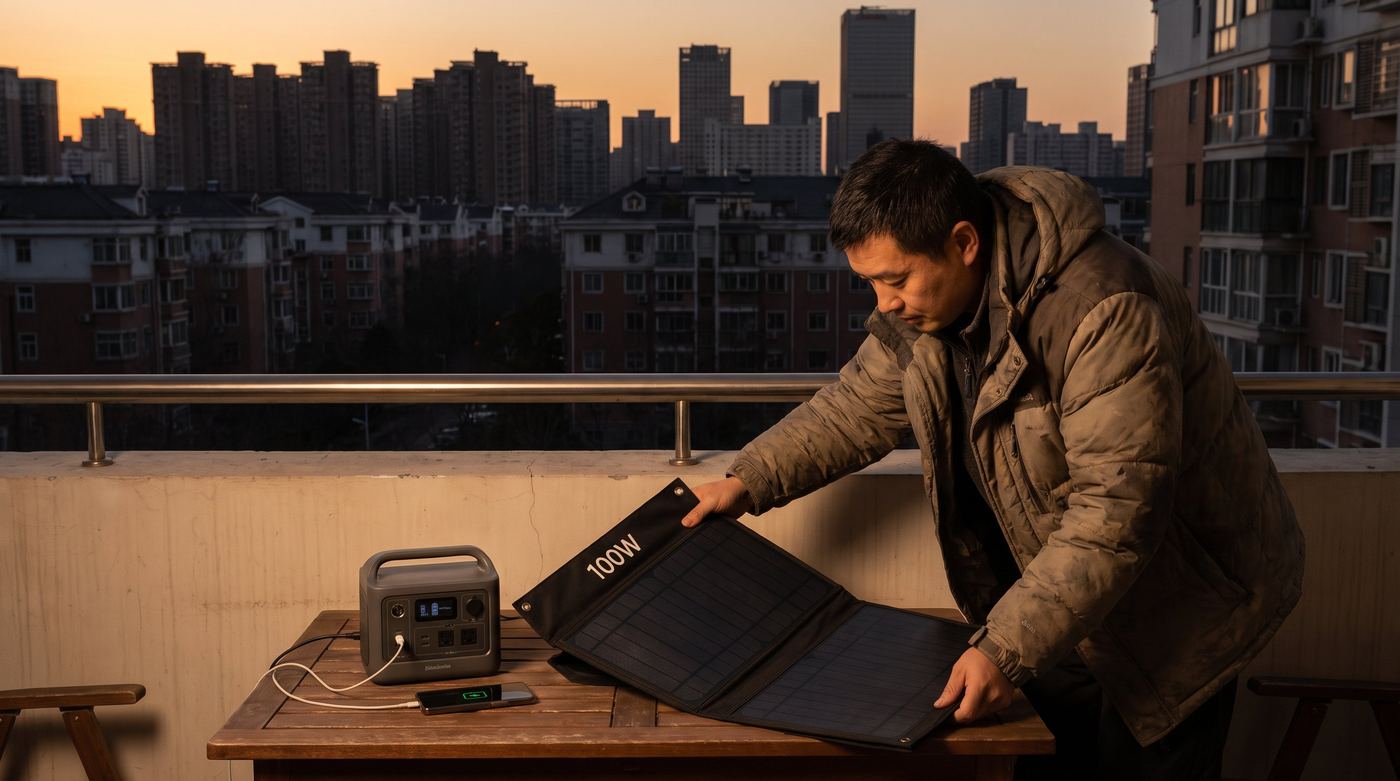
A 30W folding panel in a window charges a phone directly or refills a power bank over a day. A 100W panel refills a power station.
A hand crank
Slow, but infinite. The emergency radio's crank will give a dead phone enough for a call in a few minutes of winding. It's the backup for the backup.
What about a power station?
If anyone in the house uses medical equipment, works from home or needs the router up, a 300W power station is the step up. It runs a CPAP for a night, a router and lights for an evening, or a phone for weeks, and a folding solar panel refills it.
The one-week plan
Low-power mode, two power banks, a solar panel in the window, and a hand-crank radio in the drawer. No generator, no fuel, no noise.
Sources
Plan Backup is an independent retailer. Articles cite official guidance where it exists and say when a recommendation is ours.